
Nokätwek
Remota
10/04
2026
Salta
Artists:
Text:
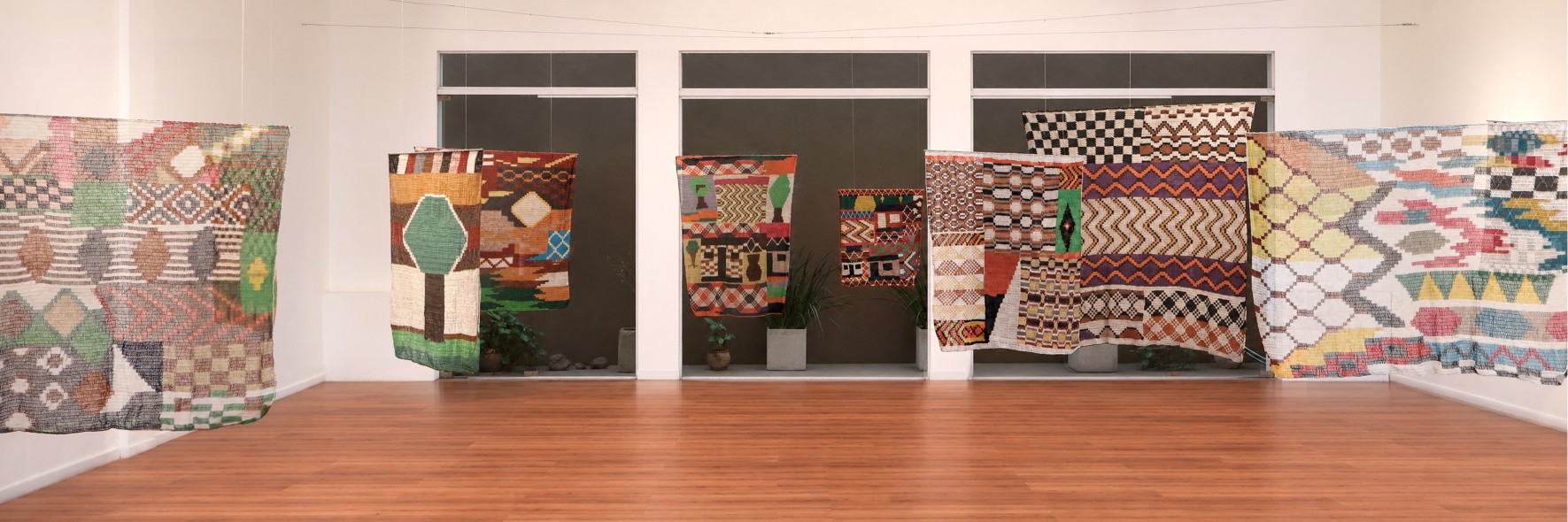
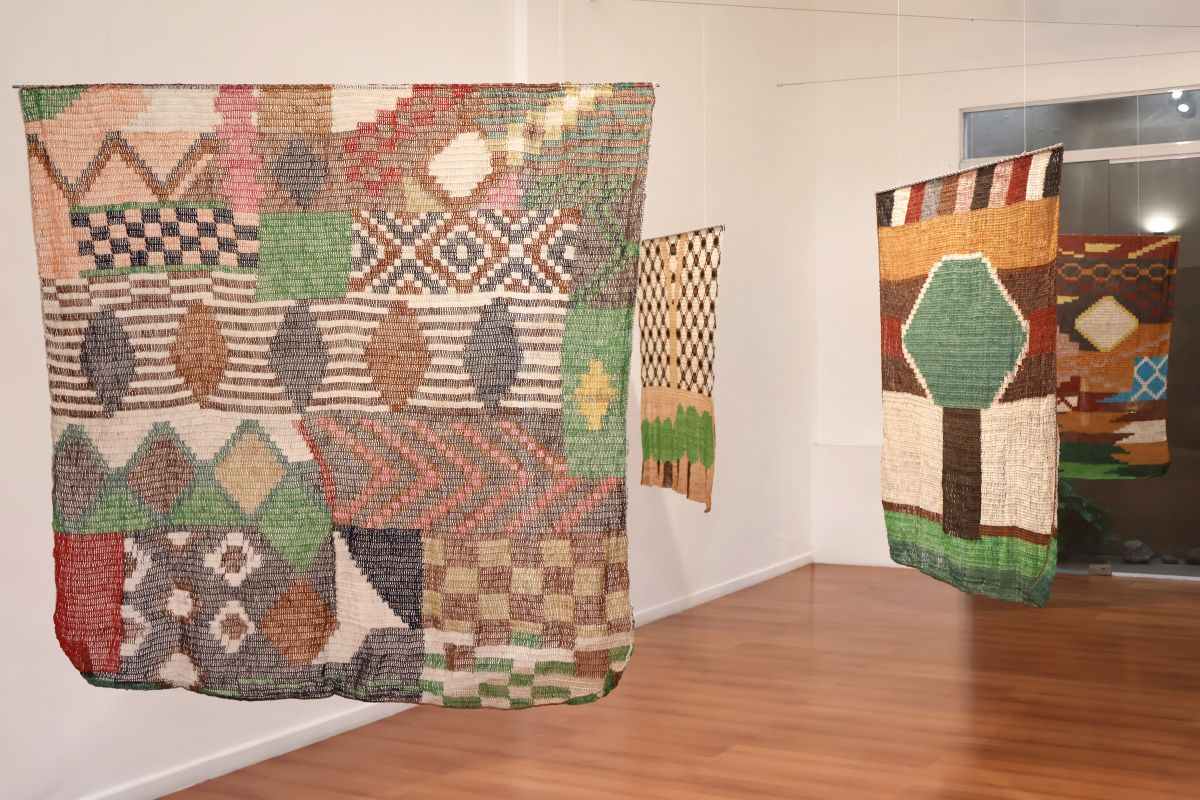
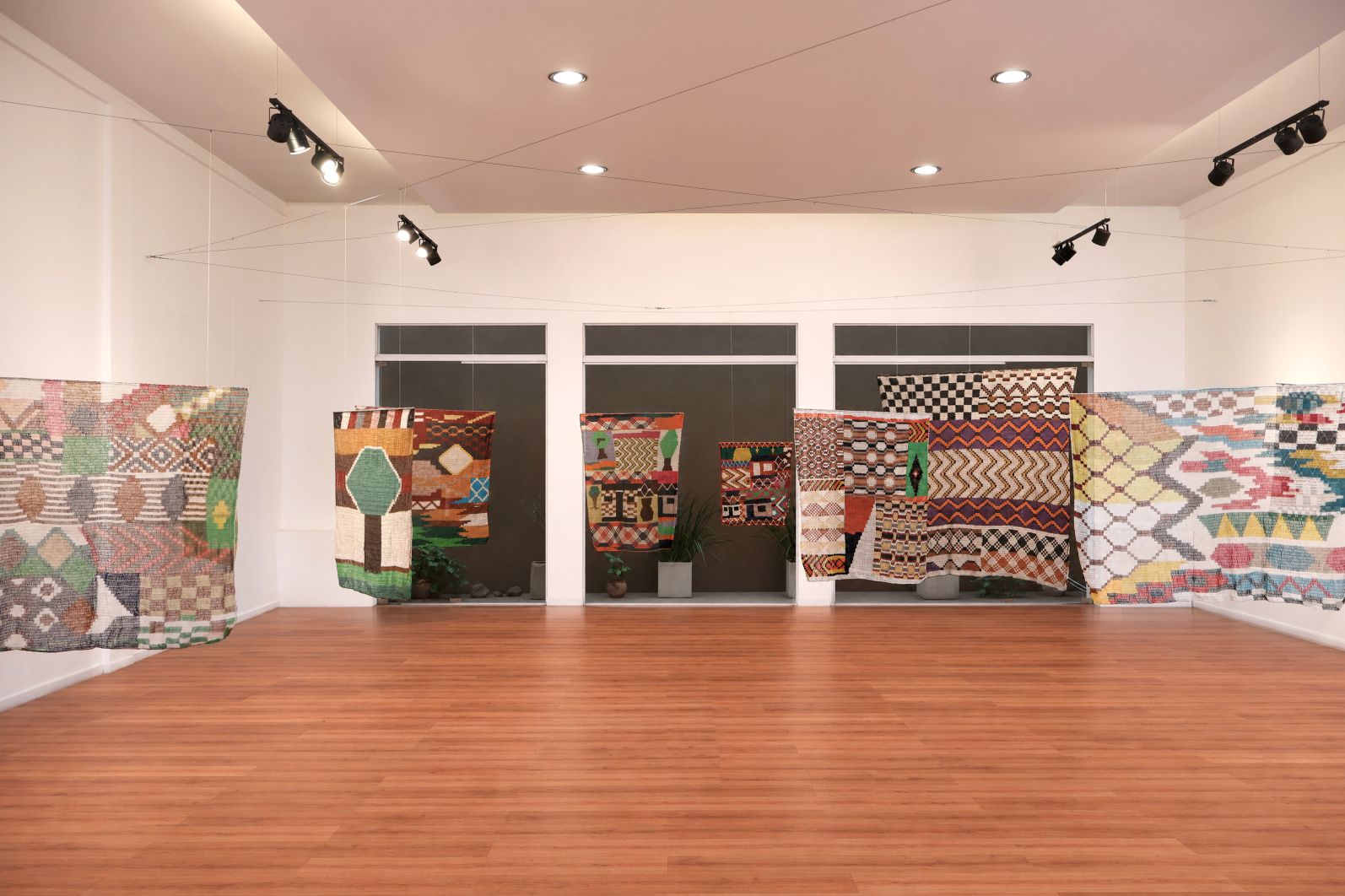
Connections in a Weave That Is Never Linear / Weaving in Wichí.
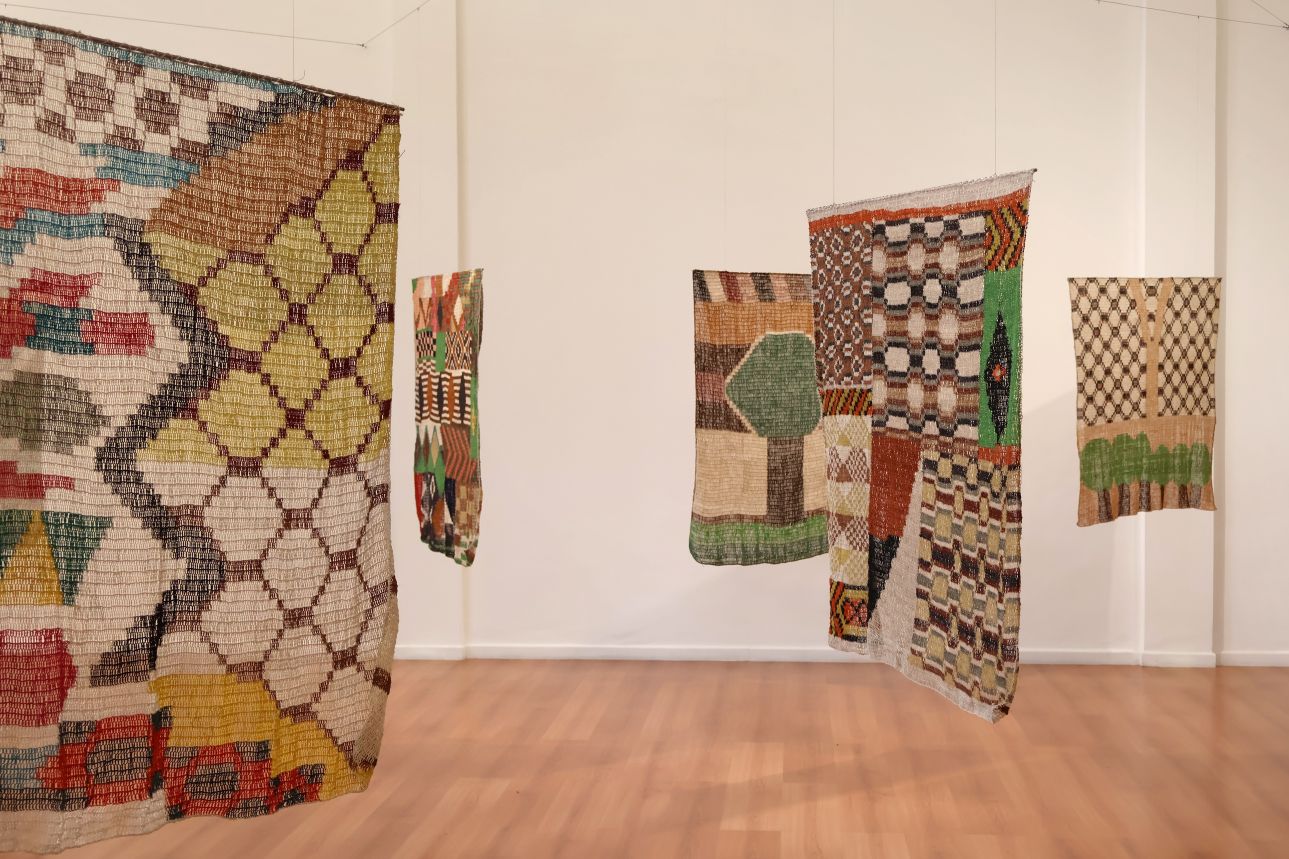
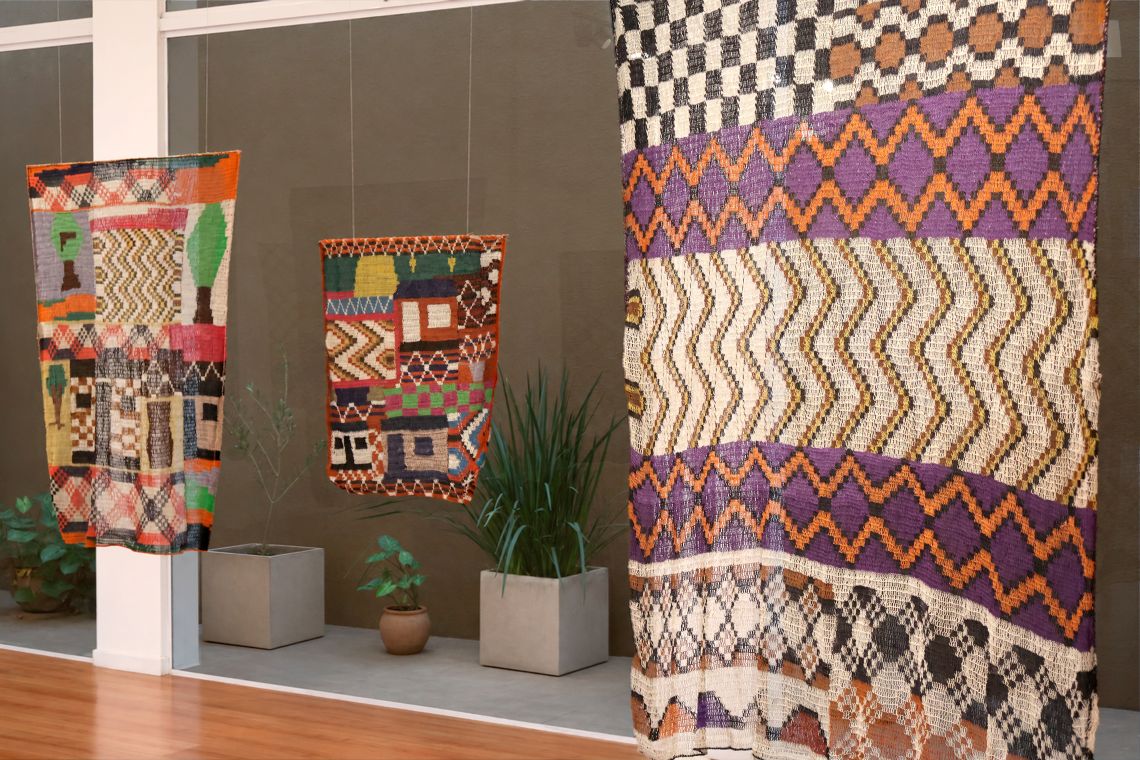
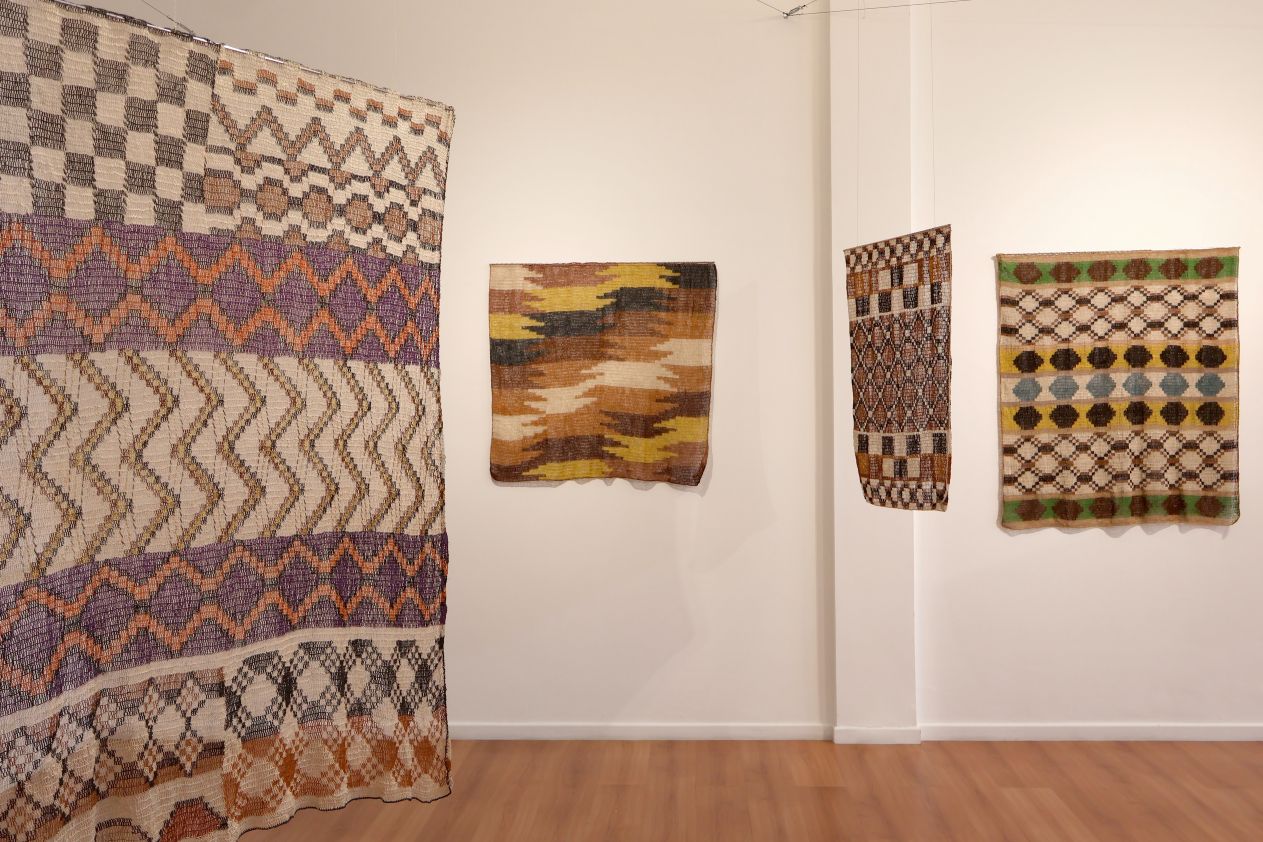
Connections are an invisible joining technique that Wichí women weavers use to splice together the threads they weave. When properly made, these connections ensure the continuity of the textiles and of the narratives woven into each yica or cloth.
Chaguar has been used for weaving since time immemorial, and today industrial yarns are also used, as well as plastic threads obtained by recycling shopping bags. Recently, I heard that some women prefer weaving with chaguar rather than plastic fiber. They say plastic is very hard to work with; men use it more often to weave nets or fishing bags because it is water-resistant.
They say that the threads on which Wichí women first came down from the sky to the earth were made of chaguar, back when the earth was inhabited by animals who later became men. Like therians, but in reverse: animals who began to perceive themselves as men and remained that way. The jaguar, the fox, the armadillo, the parrot, the iguana created music and began to live in community. In those times, women were the stars, the katetsel. They lived in the sky and descended into the forest on chaguar threads. They played tricks, drove the men wild, ate their food, and then returned to the sky. One day, they say, the parrot managed to cut the threads, and so the Wichí women remained on earth. That is why, to this day, they continue searching for chaguar to spin.
Looking for chaguar is serious business, Anabela told me. You have to find the plants with the longest leaves. Those plants are cared for by Fwusas, the owner and guardian of chaguar, and you must promise her that you will treat them well, make good work with their fibers, give them value. The good plants are found farther and farther away. Sometimes the women travel in a friend’s truck, or rent one from criollos, to reach the places from which they can enter the trails. They spend the whole day in the forest searching, telling each other stories, healing sorrows, laughing, gathering fruits, bark, and roots. When they find the chaguar, they pull it out with sticks and, taking great care not to prick themselves, remove the spines from the leaves, bind them into large bundles, and carry them with ropes knotted over their heads. Back home, the leaves are pounded, the fiber is cleaned, dried, and dyed. The thread is spun by twisting and retwisting the fiber against their legs, protected by thigh guards made from rubber cut from old tires. Making the threads takes a long time. Some are thick, some are fine. Some threads are precious.
Antonia, Analy, and Mariela know very well the threads they choose for their textiles. With them, they narrate the world. They configure, connect, weave, copy forms, search for colors, invent. They reproduce ancient motifs: armadillo ears, rhea backs, snakeskin, chañar seeds, owl eyes, tortoise shells, combining them with patterns of houses, trees, maps, tewok, lawo, tahñí, itäj. In this way they join different times. They think in their own language, which moves one way and then another, upward and downward, plunging beneath the surface and emerging again. To inhabit is to be part of this world in the present tense, and the artists know how to narrate experience through these textile-stories they are showing today at Remota gallery.
Returning to the thread, narrating this process all the way to the textiles being made today in a text like this excites us. Yet if we pay attention, we still rely on a way of telling that reveals how deeply we are haunted by the idea of the line. Almost instinctively, in a flash, we associate thread with line, and from there with boundaries, individuality, property, the solitary author, the artist, the genius. Linearity structures the world narrated by the West and constrains its thought, like a wire fence.
But thread is also a ball of yarn, a form that occupies another kind of space, a diversity of volumes and colors that are not woven linearly, neither in the old stitch nor in the yica stitch. It is never linear, not even when it is a single color. When I tried to learn to weave in the Wichí way, I was surprised by my own tendency to imagine weaving as something rectilinear. But it is not. The system is different. It is another way of thinking, one from which, if we make the effort to learn something, I suspect we will come to understand a great deal. Antonia, Analy, Mariela, and all the katetsel know this. They are patient, understanding. They adapt to the whims of another system, the art system. I think they find it amusing; it interests them, and they try to understand it, to follow its thread.
Argentine art seems to be expanding its boundaries in order to include Indigenous women artists in a different way. The katetsel have arrived with their threads, and they are here to stay. The space offered to them must be vast: every Wichí woman weaver is a star, a great artist.
Daniela Seggiaro, April 2026