
Es el sol brillando
(It’s the sun shining)
Remota
14/11
2025
Salta
Artist:
Text:
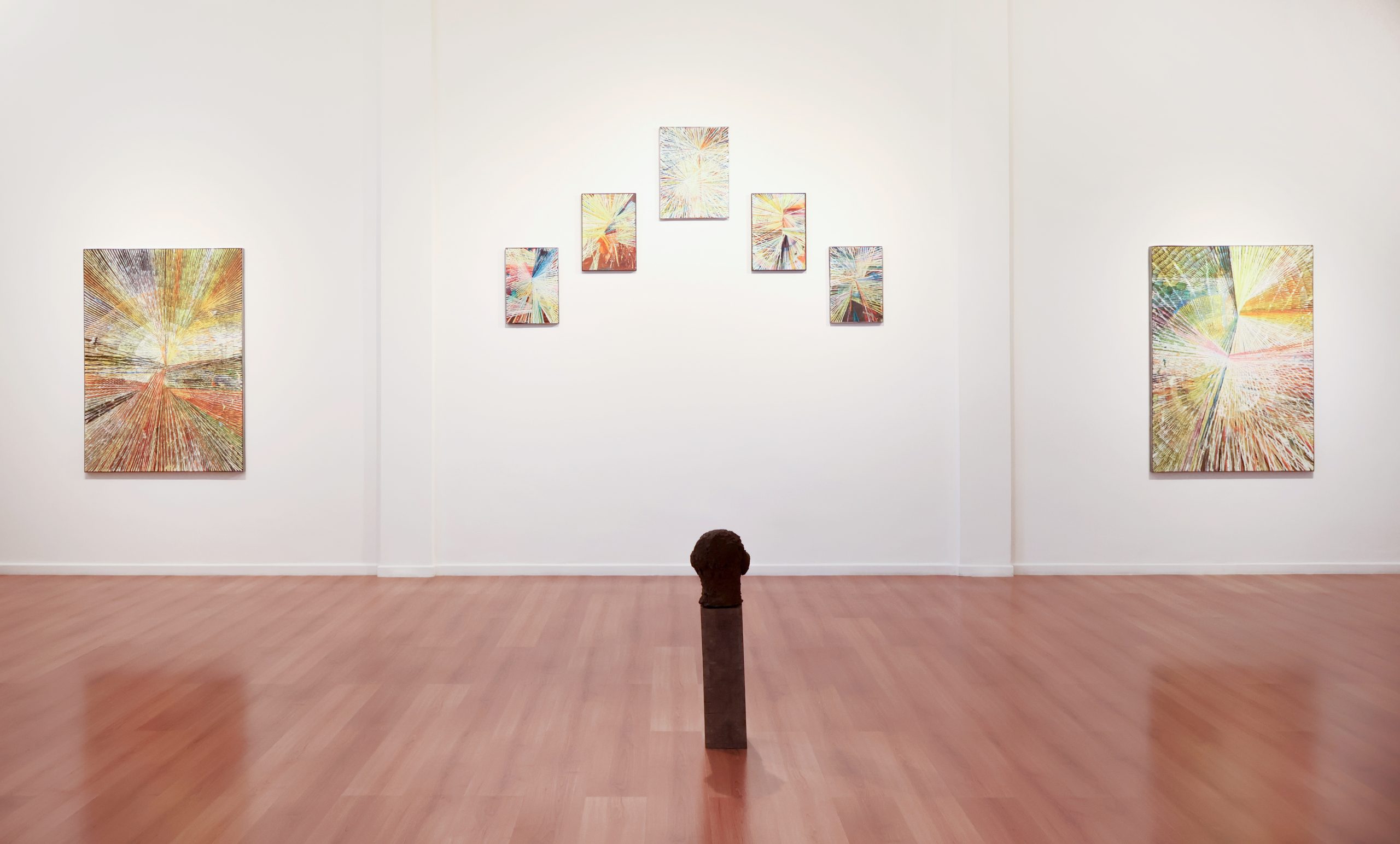
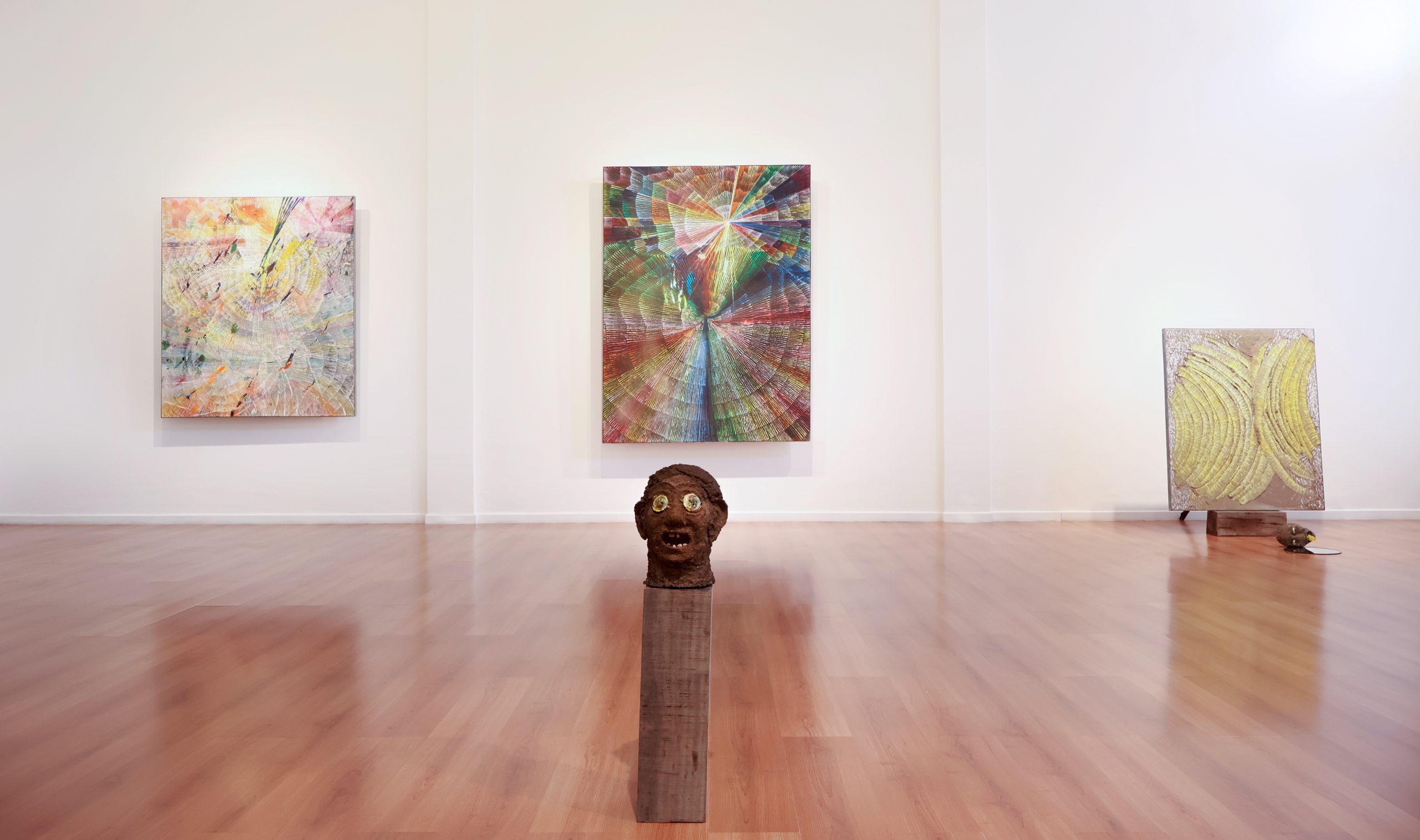
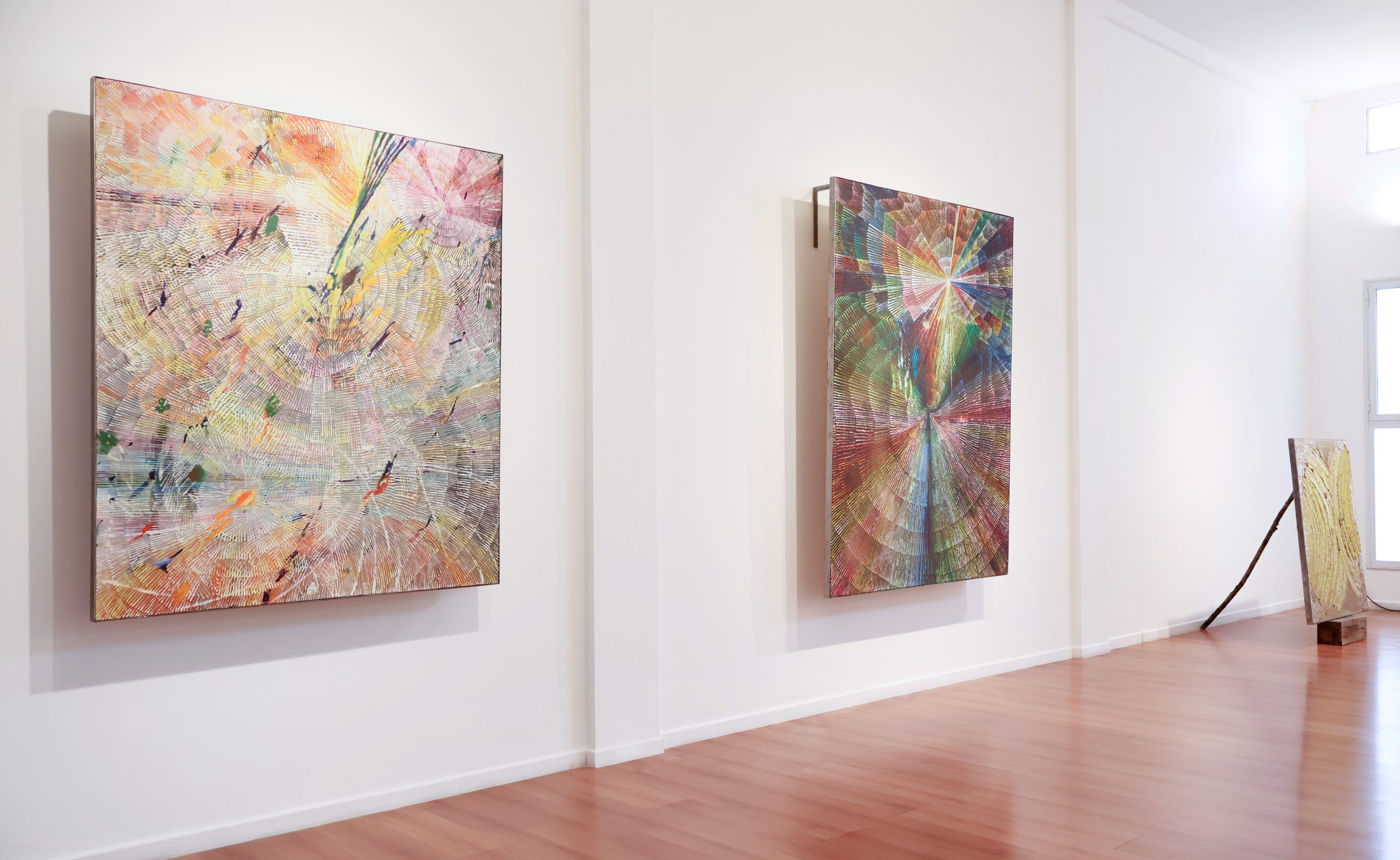
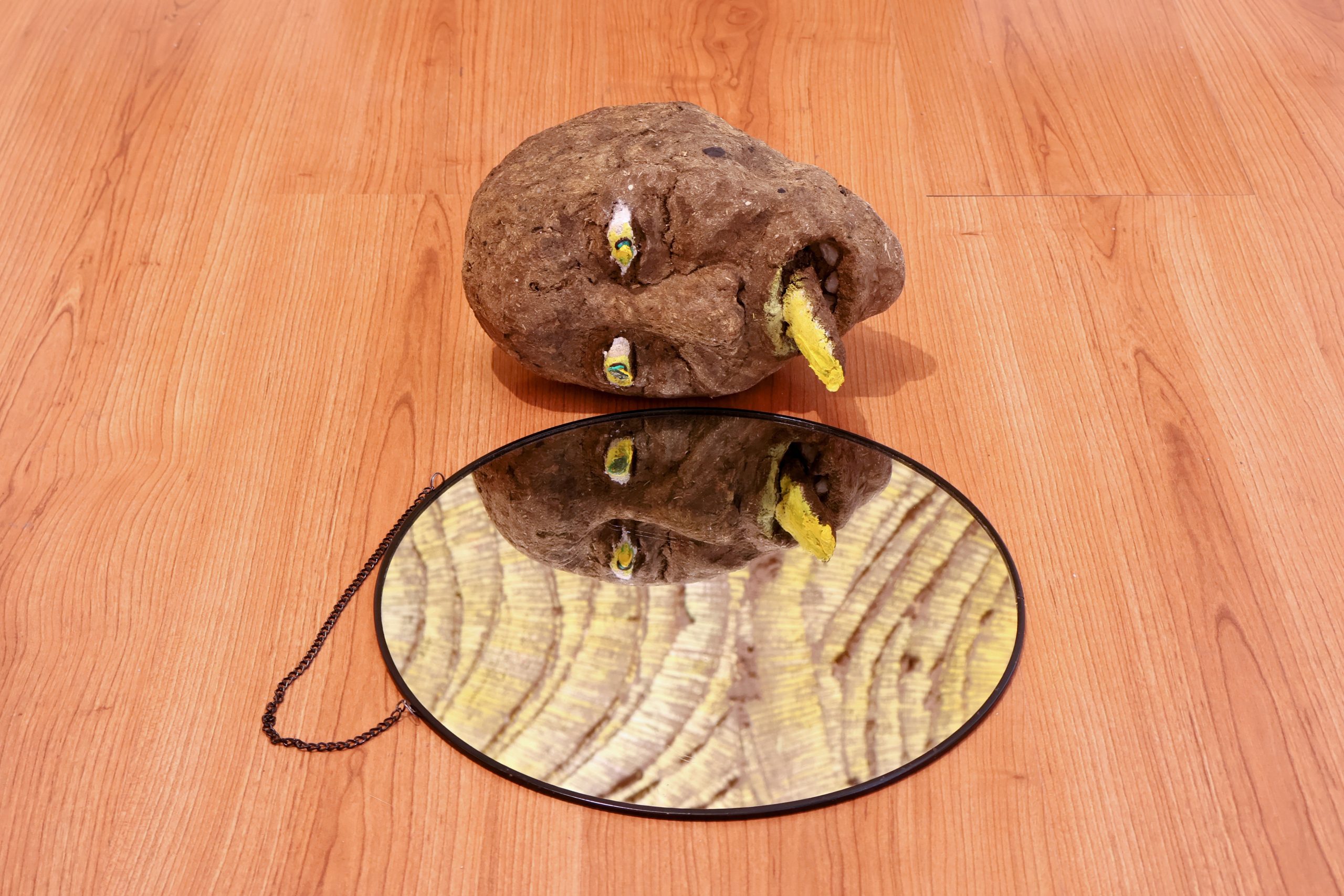
Esta noche oscura / Sobre Itamar Hartavi
I first encountered Itamar’s work a long time ago, not far from here, at Galería Inmigrante, in 2012. I say encountered because I had seen it before: at Braga Menéndez Gallery in 2011, at the Centro Cultural Recoleta in 2009, and at a handful of group exhibitions. On the main wall of Galería Inmigrante, a suspended school desk held a cardboard-masked figure that slowly threw plates down from above, like a ritual of liberation. From that moment on, it already resonated with me that there were motivations behind Itamar’s work; motivations that, once filtered through our eyes in the city and within the art world we inhabit—and which amused us—were questioning a kind of spirituality. Yet they did so without ever turning it into a theme, without ever labeling his work. That question, like Macedonio’s pumpkin, grew and now fills his cosmos. For that to happen, every artist needs to inhabit their “exceptional zone,” and back then, Itamar was not there yet.
When a question is simple, we are usually asked to specify it; when our subject is broad, we are told to locate it; when our research has no object, we are pushed to find one. But what if we want to remain with the same questions? What if what I intuitively find compelling is something that has already interested countless artists across many eras? Perhaps the specific thing is to keep asking the same question, or perhaps what is particular is the stubborn attitude of returning to it. The question of spirituality in art is one of continual presence, and that is precisely why it can feel repetitive or old-fashioned. A question that returns never comes back the same, and its answer is rehearsed by matter.
When Itamar speaks about his work, he says that “painting had to do with being able to work on myself.” The work punctuates, it returns, revisiting its own premises and preconceptions; and without that “working on myself,” a work remains at the mercy of a single direction. He also says that his works “keep growing,” and that growth probably does not stop once the works are already in the exhibition. I sense that in each work, in each show, Itamar sets up secret themes. There is an anchoring in something happening to us, in shared and concrete experiences, but he does not comment on them or make them evident at first sight. The work becomes a way to accompany the secret, to hold it, and thus the work becomes the opposite of a diary or a television channel.
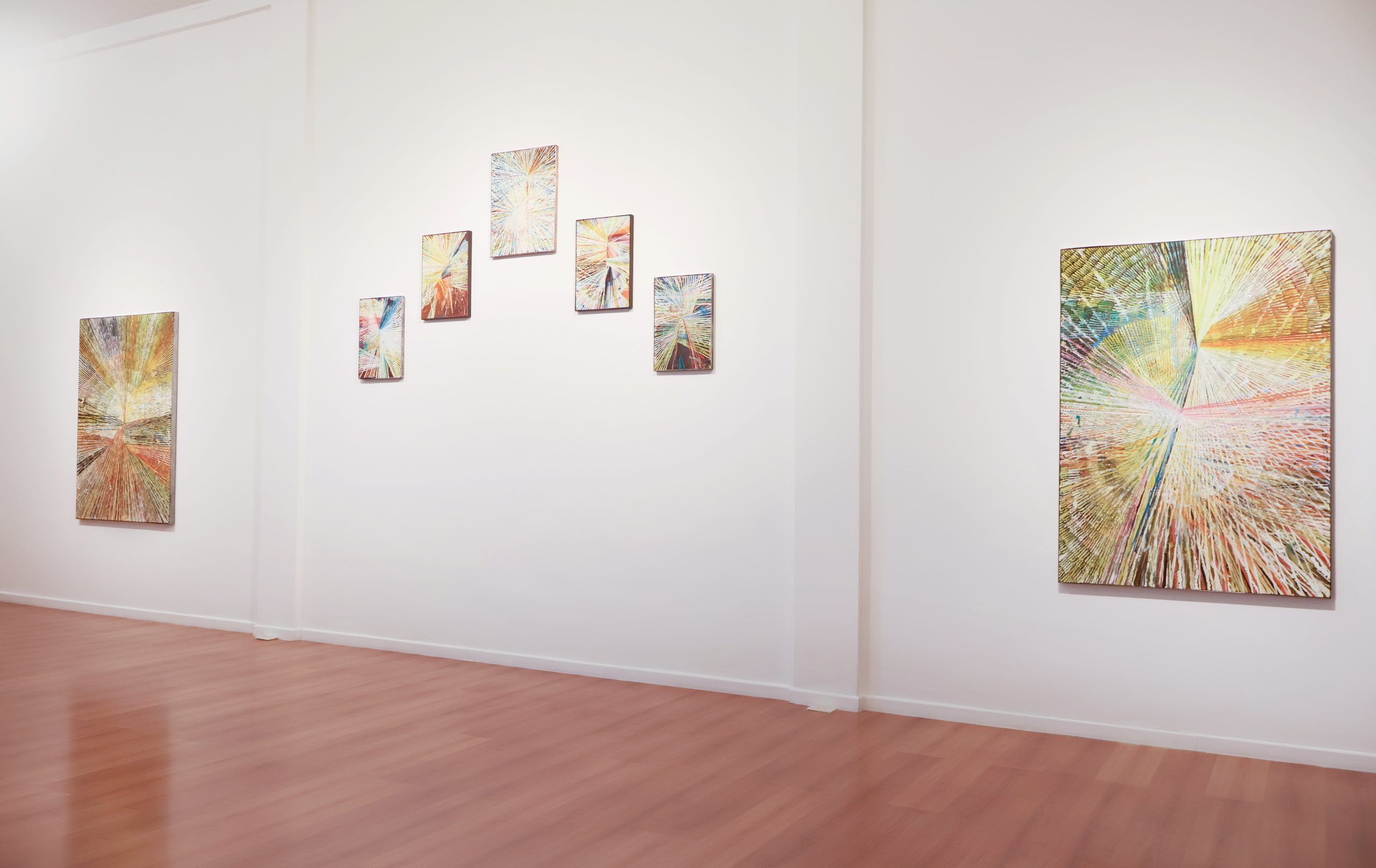
Speaking about 2020, Itamar says: “During that time, which was often very distressing for me, especially because I was seeing the world in apocalyptic terms, during drum journeys I realized that I had to make my paintings without looking at them from afar, working only up close. Influenced by Australian Aboriginal artists, who sometimes work by rolling their paintings and seeing only one part, I began to make paintings that ‘grow,’ they are dots and lines that expand over the canvas.” If in his earlier works, within the realm of figuration, caricature and color palettes generated a more clearly defined plane, structuring a scene or situation, here there is no narrative, no story, no discernible border. They have much more to do with a surface expanding or contracting. Like in the work of Doreen Chapman, an Australian painter from the Warralong community, in which figures merge with the background, documenting ways of being through an abstract language of vast color fields. As a Deaf and non-verbal artist, she has created a mode of communication far from the contours of words. Itamar’s works, like Chapman’s, have no middle distance, and their “up close” resides in the practice itself.
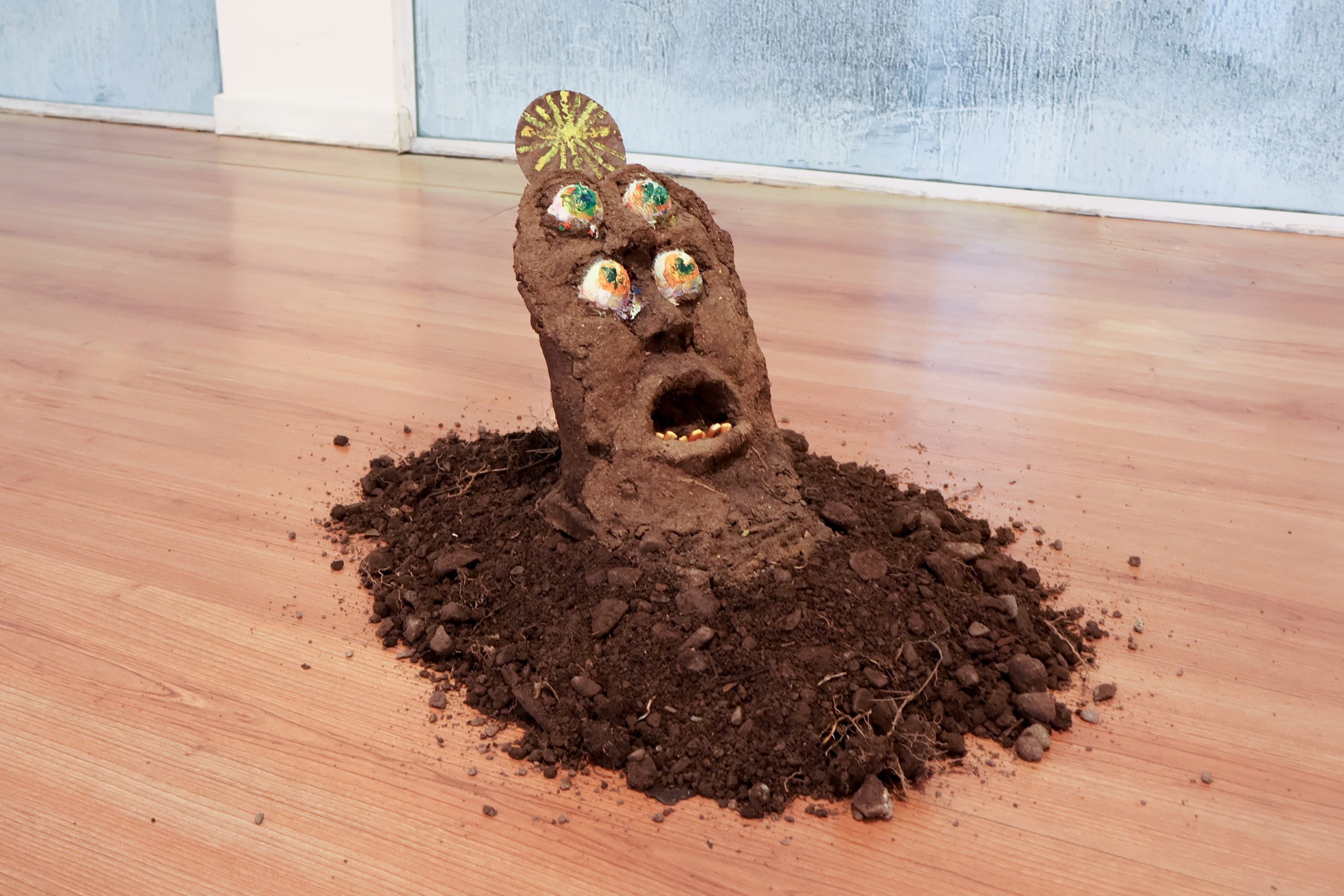
A few years ago, while researching Yente’s work, I came across the thinking of Lanza del Vasto, a philosopher who integrated religious and artistic traditions, proposing that through the verb “to rhythm” one could reach the harmony of “heart and breath.” Yente went through a period of illness that forced her to remain at rest for several months. As often occurs with many artists, rest becomes research, and so it was for her, and I believe it is also so for Itamar. In Yente’s case, embroidery emerged in response to the great, masculine, modern gestures. She embroidered drippings with the patience and care that painting on canvas does not have; she turned toward the artisanal experience of objects made from horsehair in southern Chile and embraced the border-crossing of what, in the 1950s, were still strict, permanent, and determining categories. Her experience of textile rest endured in everything that followed, though in the form of collage, building cathedrals with matchsticks or saints out of candy-wrapper foil. In Itamar’s case, rest was linked to displacement. First in Córdoba, where dung appeared as material in his work, and then in the Quebrada de Humahuaca, where earth emerged as the structural base of his surfaces. That slower time becomes the environment of the works—which for Emilio Renart was constitutive of any work: the environment and I—and records not just an autobiographical, personal, or anecdotal experience, but images that “keep growing,” capturing as much of the environment as of the self.
For Lanza del Vasto, the artisan is the opposite of impulse, which decenters inner life and acts on sudden urges. The artisan, instead, is granted a prayer. He calls for recovering animism as a style and gesture, as a way of life. He asks whether there exists a work of art that contains the way of life of non-violence, encompassing the elements of its reality: rhythm, illumination, and ecstasy. His first response is to think of light as the raw material of forms. A work contains what is proper to each thing and to its time: planting and uprooting, laughing and crying, destroying and building, mourning and dancing, throwing stones and gathering them. For Lanza del Vasto, rhythm is an agreement with the solar cycle, and in the work it is the alternation of opposites: regularity and spontaneity that lead into the inner life of images.
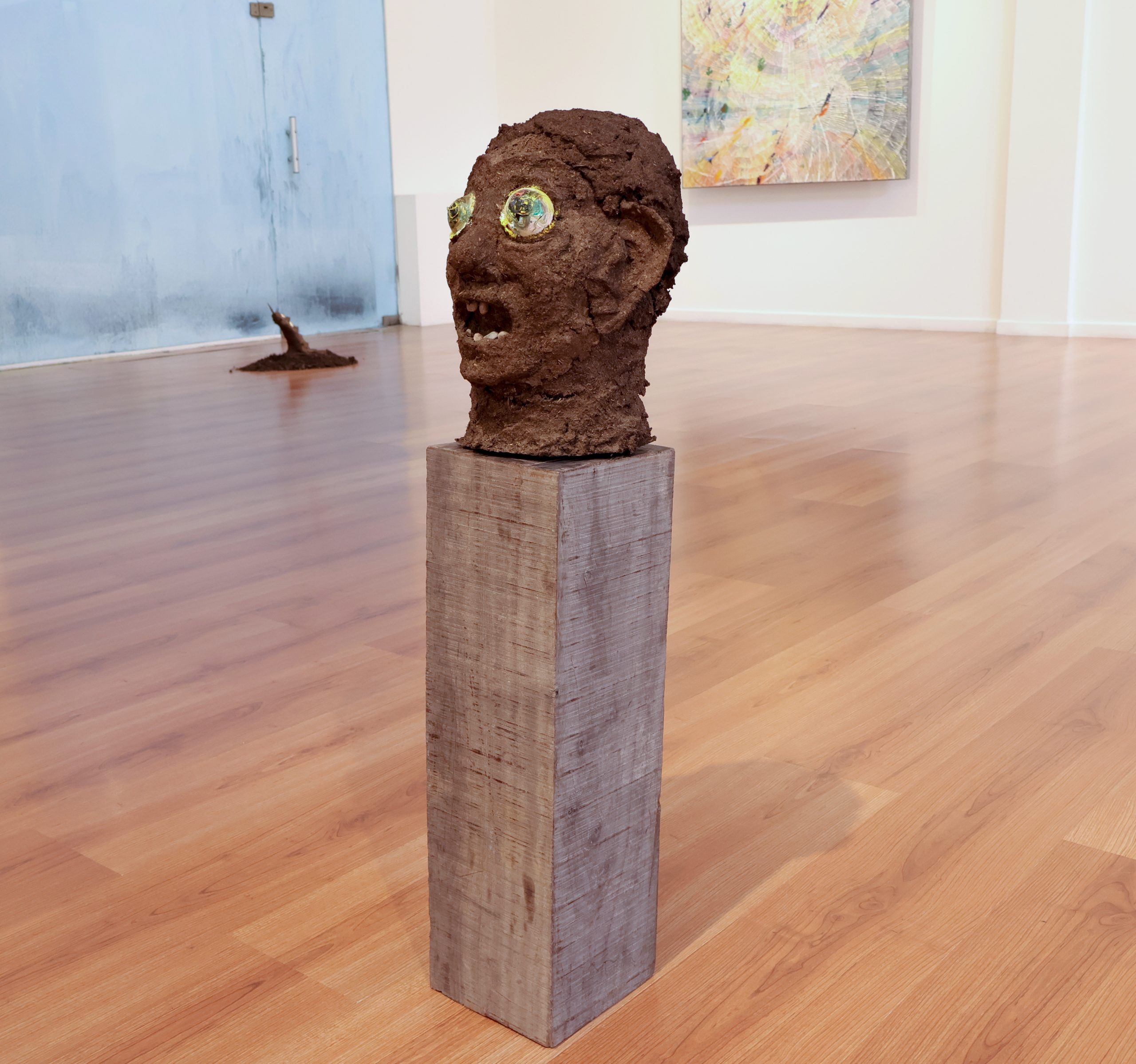
The resting activity suggested by Itamar’s paintings is counterbalanced by the heads, in continuous mental activity. Thus the perplexed mask appears—outside itself, passing through the initial surprise of contemplation and entering into Lanza’s ecstasy. Upon them, the reliefs of time are projected: on a face, they are wrinkles registering depths, furrows, and lines; in these works, it is the materials that dictate presence and aging. Those with more wrinkles and marks are the ones who laugh the most; excess laughter leaves its mark. And as Renaissance philosopher Marsilio Ficino said: “Light is the laughter of heaven,” and thus the hollows in a face are rays of light that outlive us. A system is formed in which we might think of an inversion: the paintings are the spectators, and the heads are observed.
Easily persuaded by light, the eye is fooled again and again. If all masks lie, they do so in order to delay the discovery of truth, whose first rule is fading and impermanence.
Santiago Villanueva, November 2025